Tonnage Calculator
A tonnage calculator is a simple online tool used to estimate how many tons of material you need for a construction or landscaping project. It helps builders, contractors, and homeowners calculate the required amount of materials like gravel, sand, asphalt, limestone, crushed stone, and soil.
When working on projects such as driveways, roads, foundations, or landscaping areas, it is very important to know the correct quantity of material. Ordering too much material can increase project costs, while ordering too little can delay the work.
Using a tonnage calculator makes this process fast and accurate. By entering the length, width, depth, and material type, the calculator quickly shows the estimated number of tons required for the project.
What is a Tonnage Calculator?
A tonnage calculator is a construction calculation tool that converts the volume of material into tons. It helps determine the weight of materials required to fill or cover a specific area.
The calculation is usually based on three main measurements:
- Width of the area
- Length of the area
- Depth (thickness) of the material
After calculating the volume, the tool multiplies it by the density of the selected material to determine the total tonnage.
This makes it easy to plan material purchases for construction or landscaping projects.
Tonnage Calculator Formula
If you want to do it manually or understand how this tonnage calculator works, which formula is behind this calculator, here is the below formula.
Step 1: Volume Formula
First, we calculate the Volume of the material.
For the rectangle area
Volume=L×W×D
Where:
L = Length
W = Width
D = Depth
Important:
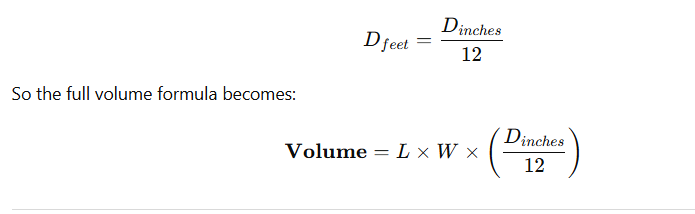
Depth must be in feet for this formula.
If depth is given in inches, convert it first:
Step 2: Convert Volume to Cubic Yards
Since construction materials are usually measured in cubic yards, we convert cubic feet to cubic yards
1 cubic yard=27 cubic feet
So:

Or fully expanded:

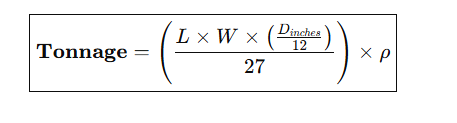
Step 3: Tonnage Formula
Now we multiply by material density.
Let:
ρ=Material Density (tons per cubic yard)
Then:
Tonnage=Volume (cubic yards)×ρ
Final Complete Formula (Big Proper Form)
Even More Expanded Version
.If you want everything in one line:
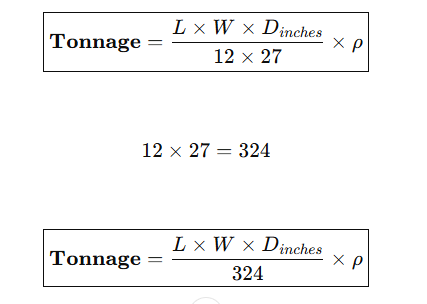
This is the Standard Construction Formula
This formula is used for:
- Gravel tonnage calculation
- Asphalt tonnage calculation – Check Here the Asphalt Driveway Cost Calculator
- Sand tonnage calculation
- Landscaping materials
How to Use the Tonnage Calculator
Using the tonnage calculator is very simple. Follow these steps:
1. Select the Unit System
Choose either Imperial units (feet and inches) or Metric units (meters and centimeters) depending on your project measurements.
2. Choose the Material
Select the material you want to calculate such as gravel, sand, asphalt, limestone, or soil.
3. Enter the Length
Enter the length of the area where the material will be used.
4. Enter the Width
Enter the width of the area.
5. Enter the Depth
Enter the depth or thickness of the material layer.
6. Click Calculate
The calculator will instantly show the estimated tons of material required.
Example of Tonnage Calculation
Let’s look at a simple example.
Suppose you want to fill a driveway with gravel.
Project measurements:
- Length = 20 feet
- Width = 10 feet
- Depth = 4 inches
After entering these values into the tonnage calculator, the tool will calculate the approximate tons of gravel needed for the project.
This helps you know how much material to order before starting the construction.
Materials You Can Calculate Using our Tonnage Calculator
A tonnage calculator can be used for many types of construction and landscaping materials such as:
- Asphalt
- Gravel
- Crushed stone
- Limestone
- Granite
- Topsoil
- Fill dirt
- River rock
- Concrete base material
These materials are commonly used in roads, driveways, patios, foundations, and landscaping projects.
Benefits of Using a Tonnage Calculator
Using a tonnage calculator offers several advantages:
- Helps estimate the correct amount of material
- Prevents over ordering or under ordering
- Saves money on construction projects
- Makes project planning easier
- Reduces material waste
Because of these benefits, contractors and engineers frequently use tonnage calculators during construction planning.
Where Tonnage Calculators Are Commonly Used
Tonnage calculators are useful in many types of projects including:
- Driveway construction
- Road paving projects
- Parking lot development
- Landscaping work
- Garden pathways
- Foundation preparation
- Backyard gravel installation
- They help ensure that the right amount of material is used for the project.
Frequently Asked Questions (FAQs)
What is a tonnage calculator used for?
A tonnage calculator is used to estimate the total tons of material required for construction or landscaping projects.
How do you calculate tonnage?
Tonnage is calculated by multiplying the volume of the area by the material density.
Can I use a tonnage calculator for gravel?
Yes, the tonnage calculator is commonly used to calculate gravel tonnage for driveways, roads, and landscaping projects.
Why is tonnage important in construction?
Tonnage helps contractors determine the correct weight of materials needed, which helps in planning and budgeting.
Is the tonnage calculator accurate?
The calculator provides a very close estimate, but actual results may vary slightly depending on material compaction and moisture content.
Related Calculators