Plaster Calculator
What is a Plaster Calculator?
A plaster calculator is a simple online tool that helps you calculate how much cement and sand you need for wall plastering. In construction work, it is very important to know the exact quantity of materials. If you use too much material, your cost will increase. If you use less, the work may not be completed properly. That is why this plaster calculator is very useful for builders, engineers, and homeowners.
Why is Plastering Important?
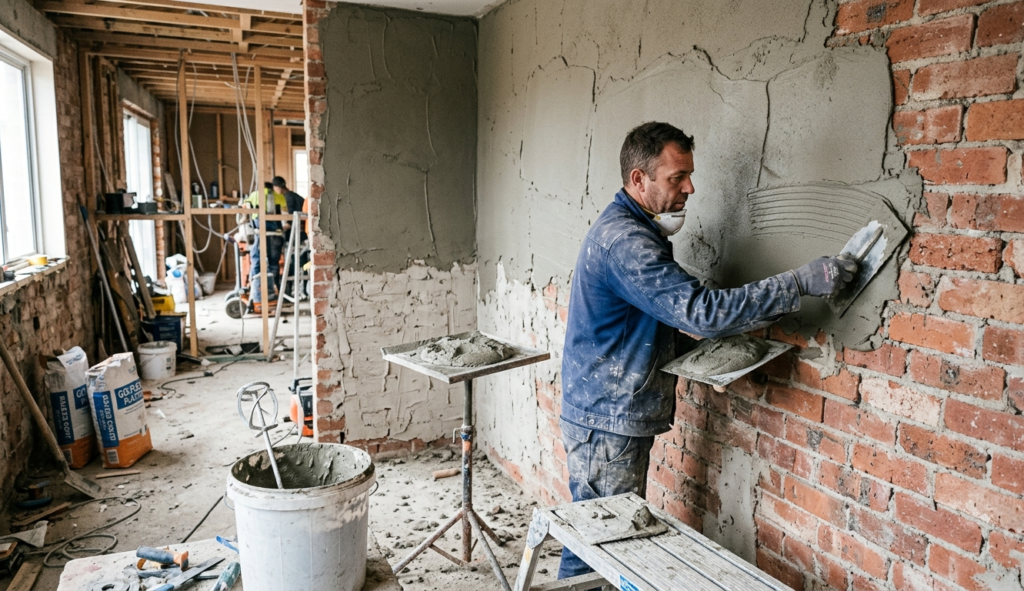
Plastering is the process of applying a thin layer of cement mortar on walls and ceilings. It makes the surface smooth, strong, and ready for paint. Good plastering also protects walls from weather and damage. For strong and durable plaster, it is important to use the correct amount of cement and sand. And for that you can use our Plaster calculator to find exact amount of cement and sand required for the work.
How Does the Plaster Calculator Work?
The plaster calculator works on a simple formula. First, it calculates the wall area by multiplying length and height. Then it uses the plaster thickness to find the volume of plaster needed. After that, the wet volume is converted into dry volume using a standard factor of 1.33. Finally, based on the selected mix ratio like 1:4 or 1:5, the calculator calculates the amount of cement and sand required.
How to Use the Plaster Calculator?
Using the plaster calculator is very easy. First, enter the wall length and height. Then select the plaster thickness, which is usually 10mm to 12mm for internal walls and 15mm to 20mm for external walls. After that, choose the mix ratio such as 1:4, 1:5, or 1:6. Once you click the calculate button, the tool will instantly show the amount of cement in bags and sand in cubic meters.
Standard Plaster Thickness
The thickness of plaster depends on the type of wall. For internal walls, the thickness is usually between 10mm and 12mm. For external walls, it is generally between 15mm and 20mm. Using the correct thickness is important for strength and long-lasting results.
Common Mix Ratios for Plastering
Different mix ratios are used depending on the strength required. A 1:4 ratio is strong and mostly used for external walls. A 1:5 ratio is commonly used for normal plastering work. A 1:6 ratio is used for lighter applications. Choosing the right ratio helps in getting better durability and finish.
Benefits of Using a Plaster Calculator
Using a plaster calculator saves time and reduces mistakes. It helps you get accurate material estimates without doing manual calculations. You can avoid wasting cement and sand, which helps in reducing cost. It also helps in planning your work better and completing projects more efficiently.
Frequently Asked Questions (FAQs)
The following are some FAQs that most people ask related to the plaster calculator.
How do you calculate plaster quantity?
Plaster quantity is calculated by finding the wall area (length × height) and multiplying it by plaster thickness. Then the wet volume is converted into dry volume using a factor of 1.33, and materials are divided based on the mix ratio.
How much cement is required for plaster?
The amount of cement depends on the wall size, thickness, and mix ratio. On average, one cement bag covers around 1.2 to 1.6 square meters of plaster, depending on thickness and ratio.
What is the best mix ratio for plaster?
The most commonly used mix ratios are:
- 1:4 for strong plaster (external walls)
- 1:5 for normal plaster
- 1:6 for light plaster
What is the standard thickness of plaster?
Standard plaster thickness is:
- 10mm to 12mm for internal walls
- 15mm to 20mm for external walls
Can I use this calculator for ceiling plaster?
Yes, you can use this plaster calculator for ceiling plaster. Just enter the length and width of the ceiling area instead of wall dimensions.
Is this plaster calculator accurate?
Yes, this calculator provides accurate estimates based on standard construction formulas. However, small variations may occur depending on site conditions and workmanship.
Related Calculators You Can Use for Construction-Related Work
Asphalt Driveway Cost Calculator